
Message from DEC
Dai-ichi Electric Co., Ltd. President Hiroshi Sato
Motive that led me to the invention of Hybrid Actuator

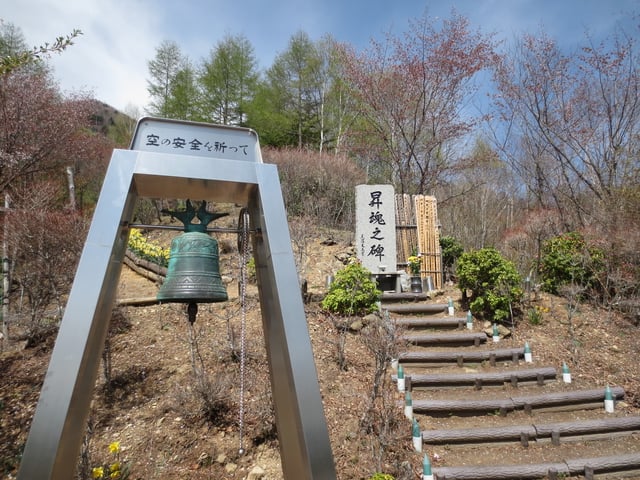
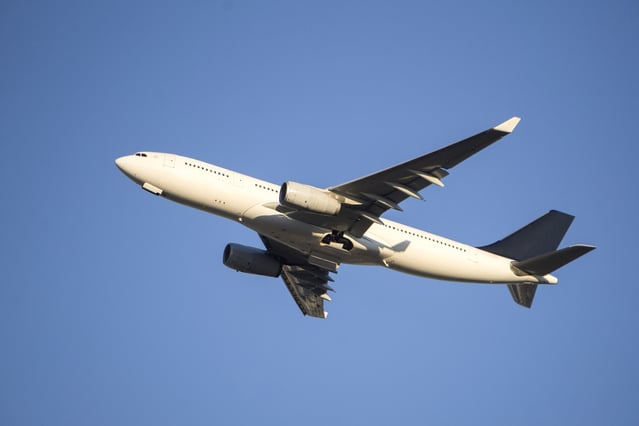
More than 40 years has passed since JAL123 from Haneda to Osaka crashed in the Osutaka Mountain near Uneno Village in Gunma Prefecture in Japan and killed 520 people on board. (Note: 2025 is the 40th anniversary of the accident. Many people visited the site of the accident and a memorial service was held on the site.)
It was inconceivable for a person who is engaged in fluid oil equipment manufacturing that the disastrous accident occurred due to the destruction of all 4 line of fluid oil systems.
For security and safety, there are four hydraulic lines in parallel on the airplane. One main line and three back-up lines. But all these four lines are combined together to go through a narrow section of the rear end of the airplane. On JAL123 all four hydraulic lines in the section were destroyed instantaneously when the pressure wall at the rear end collapsed. Once all hydraulic lines failed, there was no other way but the airplane lost its control.
If a hydraulic system is on the ground level , the system, eventually stops even if oil leaks. But it is only way to crash to earth for airplanes regardless of their sizes once the hydraulic system fails.
Since the time of the accident, there has been a large move of trend away from fluid drive systems towards electric drive systems. The high power fluid drive systems for large machines have been blamed of oil leakage, inefficiency of energy consumption, high heat generation, noise, vibration, dirtiness, etc. and have been replaced by electric drive systems.
However, it is well known that when a gigantic airplane flies at near-sonic speed, the rudder on a vertical fin and flaps on tail-planes tend to move like flags in wind (called flutter) and if it happens the rudder of fins are eventually destroyed. It is well understood that the flutter can only be prevented by holding the rudder or flap by hydraulic cylinders with high stiffness coefficient. It is impossible to control the attitude of high speed airplanes by electric drive actuators.
Electric drive actuators can’t do it but fluid drive systems are susceptible to failure. Then what should we do? This was the motive of my effort to develop the Hybrid actuator.
I thought that if pipes were eliminated from the system, at least one cause of accidents could be got rid of. I concluded that if a motor, an oil pump and a hydraulic cylinder are combined in one piece, then pipes could be confined in manifold and were not exposed to outside of the unit. But once this idea was tried, it was found that control valves impeded pipe-less design. Making a Hybrid model means to create a light, compact actuator. For this purpose, the size and weight of control vales was a big obstacle.
Total elimination of control valves requires totally new ideas and design concept. After pondering and searching for control measures other than control valves, I came up with an idea to control oil pumps directly by servo motors. The output direction of fluid oil can be changed by rotating direction of oil pumps. This means that oil pumps can replace direction control valves. Once oil pumps are stalled, fluid oil flow stops. This function is equivalent to that of flow control valves.
By controlling the output toque of servo motor, oil pressure in proportion to the torque can be obtained. This means that oil pressure can be regulated without pressure control valves. The elimination of direction control valves, flow control valves and pressure control valves means that all controls required for actuator can be done by a servo motor.
Thus I successfully got rid of pipes and control valves from fluid actuator and put a motor, an oil pump and a cylinder together in one piece to make it Hybrid model, which is light and compact as well as has high efficiency with high stiffness coefficient. The amount of fluid oil is almost one fortieth (1/40) to one fifties (1/50) as little as that of conventional fluid systems. This makes disposal of used oil much easier and helps reduce impact on environment.
Hybrid actuator is controlled by a servo motor electrically and electronically. So it should be categorized as an electric drive actuator instead of a fluid drive actuator. The reason being, it converts electric motor’s rotating power to oil pressure which in turn drive cylinder rod. In this process, fluid oil is used as just a media to transmit the force of electric motor to hydraulic cylinder. Because servo motor assumes control, the Hybrid actuator is to be defined as electric drive actuator. As a compromise,Hybrid actuator can be called an electro-hydraulic actuator.
Now Hybrid actuator controls the position and thrust of the rod at the same time, which conventional fluid system cannot do at all, and control the position by the accuracy of micron and the thrust by one four thousandth (1/4000) of full length of the stroke.
In sum, our Hybrid actuator has achieved simplicity, compactness, lightness as well as a high precision control with high energy efficiency and low vibration and little heat generation.
In other countries, similar type of actuators are called EHS (Electro Hydraulic System) or EHA(Electro Hydraulic Actuator) and categorized as an electric drive actuator. I foresee that 21st century be an era of electro-hydraulic actuators while the actuators with control valves was dominant in 20th century.
I started developing Hybrid actuator with an idea of reducing airplane accidents. Now my product may be able to contribute not only to reduce the accidents but to save the global environments. If so I feel very happy.